Jakarta police arrest suspect in Menteng teen killing
The Jakarta Metropolitan Police command named MB, 36, as a suspect in the killing of 16-year-old AS in Menteng, Central Jakarta, after arresting him less than 24 hours after the attack.
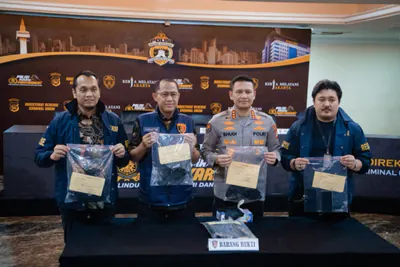
The Jakarta Metropolitan Police command (Polda Metro Jaya) named MB, 36, as a suspect in the killing of teenager AS, 16, on Jalan Sumenep in Taman Lawang, Menteng, Central Jakarta, on Wednesday 18 November 2026, according to TVRI News. RDB, 19, was seriously injured.
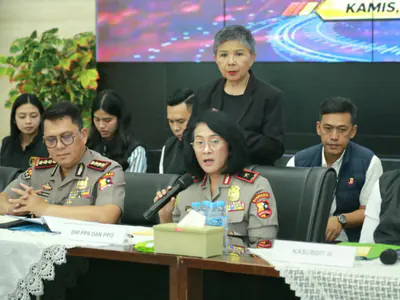
The director of general criminal investigation at Polda Metro Jaya, senior police commissioner Kombes Pol. Imron Ermawan, said MB was arrested around Bogor Station less than 24 hours after the incident, which occurred at 00.42 Western Indonesian Time (WIB), as reported by TVRI News.
Investigators said a dispute between the victim's group and MB and several of his companions allegedly triggered a slashing attack with a folding sickle. AS suffered a wound to the right thigh and died, while RDB was injured in the left hand.
MB allegedly threw the sickle into a river in the Hayam Wuruk area at Simpang Olimo and then fled to Bogor. The head of public relations at Polda Metro Jaya, senior police commissioner Kombes Pol. Budi Hermanto, said the resolution of the case was part of protecting the public.
Presumption of innocence in the investigation
Naming someone a suspect is an early stage in Indonesia's criminal justice system. The status means investigators have a strong suspicion that the person committed a crime, usually supported by at least two pieces of evidence. The public should understand the difference between a witness, a suspect, a defendant and a convict. A witness gives testimony about an event heard, seen or experienced personally. A suspect is someone believed to have committed a crime based on at least two pieces of evidence. A defendant is a suspect who has been charged and tried in court, while a convict is a person found guilty by a final, legally binding verdict. The presumption of innocence requires the entire process to be handled carefully, from questioning and evidence collection to the compilation of the case file.
In violent cases that kill a victim, investigators commonly rely on several types of evidence. Witness statements, medical examination or autopsy results, surveillance camera footage, forensic laboratory tests on bladed weapons and a suspect's confession can reinforce one another. Physical evidence such as a discarded bladed weapon is also important because biological traces and wounds on the victim must match the alleged instrument. For incidents that occur in the early hours, witnesses' movement patterns, communication times and the location where evidence was discarded are often rechecked to avoid wrongful arrest. If the evidence is incomplete, the case risks failing at trial.
Protecting victims and their families is an important part of handling criminal cases. Victims are entitled to assistance, information about case developments and recovery under legal mechanisms. In cases involving teenagers, investigators must also consider the psychological condition of victims and witnesses. This approach is not only about punishing those found guilty, but also ensuring that justice can be understood by families and the public.
After a case file is declared complete, prosecutors will determine whether the case is fit to be brought to court. At that stage, the suspect's status changes to defendant, and proof is tested fully in trial. The public has a right to receive information, but the media and authorities must still protect the reputation of parties who are not yet convicts. For that reason, the word 'alleged' is part of the presumption of innocence, so that reporting does not pass judgment before a verdict.
Practical steps for city residents
The case reminds city residents that violence can arise from brief disputes, especially in public spaces during high-risk hours. For families with teenagers, conversations about the risks of gathering late at night, using bladed weapons and avoiding conflict are important forms of prevention. Parents also need to know that victims or witnesses of violence have the right to seek medical help immediately and report the incident to the nearest police station or the Indonesian National Police (Polri) emergency service 110.
For the public, the practical value of legal news like this is an understanding of rights and procedures. A quick report can help investigators find evidence, question witnesses and prevent suspected parties from fleeing. However, residents also need to refrain from spreading identities, accusations or conclusions of guilt before a court verdict. That principle protects victims, families and people who are still suspects from mob judgment.
The direct impact of this case on national policy is not automatically visible. What readers can watch for in the future are developments in the indictment, the articles used, and protections for victims and witnesses during the trial. This kind of handling also becomes a note for authorities in other regions, especially regarding speed in making arrests, caution in collecting evidence, and public communication that does not pass judgment.
Related news
Anticipating drug trafficking, the East Java Regional Police command (Polda Jatim) and the Indonesian Navy (TNI AL) secure waters. A suspect in the killing of Bripda Oktovianus was arrested in Keerom. The Bekasi Metro Police arrested two suspected robbery perpetrators with bladed weapons.