Polda Banten details timeline of Baduy Luar fire, suspected to start from stove
Polda Banten said a fire that burned down 21 houses in Baduy Luar, Lebak, was suspected to have started from a stove, with no deaths or injuries.
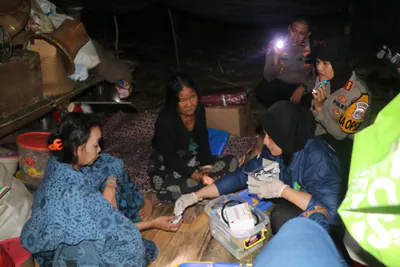
A fire struck a settlement on customary land (tanah ulayat) in Baduy Luar (Outer Baduy), Kanekes village, Leuwidamar subdistrict, Lebak regency, Banten province, on Thursday night, 19 November 2026, burning down 21 residents' houses and damaging 11 other houses, two rice granaries and a saung lisung, a traditional rice-pounding hut, without causing deaths or injuries, according to a report by TVRI News, Indonesia's public broadcaster's news arm.
Senior Police Commissioner Maruli Ahiles Hutapea, the head of public relations at the Banten regional police headquarters (Polda Banten), said the fire was suspected to have started from a stove lit by a resident identified only by the initials DA to boil water at about 21:00 Western Indonesian Time (WIB), TVRI News reported. DA then rested and fell asleep.
At about 22:30 WIB, DA woke to find the fire had grown in part of the house. DA went out asking residents for help, but the flames spread quickly to nearby buildings and were extinguished at about 01:00 WIB.
The Leuwidamar police station (Polsek Leuwidamar) visited the site to record the damage, take witness statements and assist affected residents. Maruli urged the public to ensure stoves were completely out before leaving home.
Lebak Police Chief Assistant Commissioner Arninsi expressed concern and arranged post-fire health services and aid, including vitamins, medicine, basic necessities packages and blankets, for the affected residents.
Baduy customary territory and fire risk
The Baduy people of Lebak are generally divided into Inner Baduy (Baduy Dalam) and Outer Baduy (Baduy Luar). Baduy Luar is more open to visitors, trade and everyday dealings with outsiders, but remains bound by customary rules in the Kanekes area. Customary land is not merely a place to live; it is a shared living space managed under customary law. A fire in a customary settlement therefore affects not only one family, but also the interdependent social and economic structures of the community.
Rice granaries and saung lisung are central to the food system of an agrarian community. Granaries store harvested rice, while a saung lisung is used to pound rice before it is stored or processed into rice. Losing such buildings means residents lose homes as well as food storage and processing facilities. In the short term, that can affect food needs, grain storage and household activities that usually centre on the granary.
Fire risk rises in traditional settlements when stove fires are used for cooking or lighting and are left before being fully extinguished. At night, sleeping residents may lose the chance to detect a fire early. A blaze that has already grown in one house can easily spread to nearby buildings, especially where houses stand close together and water sources are inadequate. Witness accounts about the fire's origin are therefore important for understanding the suspected source.
Handling disasters in customary territory usually requires coordination among customary leaders, village officials, police and health authorities. Recording victims, checking witness statements and meeting basic needs are part of the initial response. In reporting such cases, the word suspected indicates that the fire's origin is based on preliminary statements, not a final legal conclusion.
Impact on residents' safety and recovery
The incident reminds readers in Indonesia that household fires often begin with small habits, such as leaving a stove alight or failing to make sure the fire is completely out before sleeping. The risk exists not only in customary areas but also in densely populated settlements, rural areas and places where water and firefighting equipment are limited. Ensuring that stoves, gas burners, candles and other heating devices are safe before being left behind is a simple step that can prevent major losses.
Damage to houses, rice granaries and saung lisung shows that the impact of a fire does not stop with the buildings that burn. When homes and food storage facilities are damaged, residents need rapid emergency assistance, including health checks, medicine, food and blankets. Police response and health services at the site are important to reduce further risk, especially for people who have lost property.
For the wider public, such reports should be read carefully. As long as the legal status has not been established, the use of the word suspected should be understood as part of an investigation, not a verdict. What matters next is whether the exact cause of the fire can be confirmed, how houses and granaries will be restored, and whether fire prevention in customary settlements will be strengthened.
Related stories
President Prabowo arrives in Jakarta after ASEAN and APEC summits.
Revision of the National Defence Law targeted for early 2027.
Prabowo witnesses 35 Indonesia-China business deals.