Legal experts back police investigation into alleged treason in wiretapping case
Legal experts support the Criminal Investigation Agency of the Indonesian National Police in probing alleged treason in an illegal wiretapping case, while urging investigators to uphold legality and presumption of innocence.
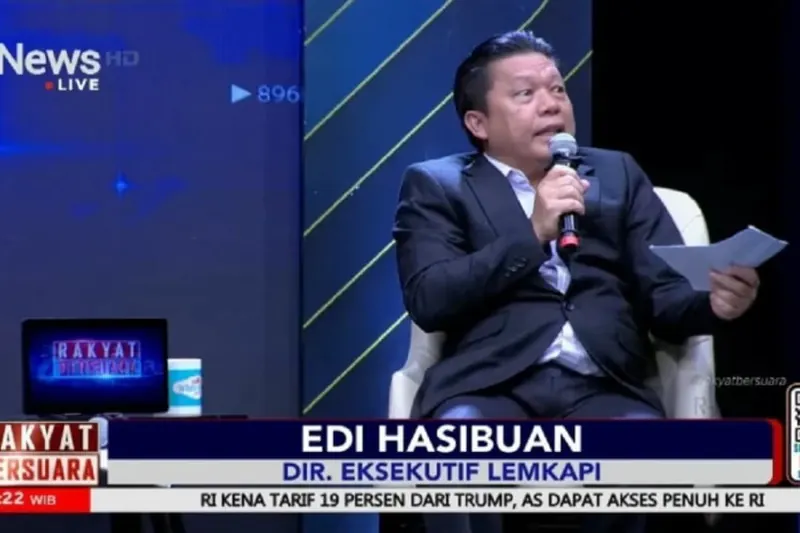
Support has flowed to National Police Chief (Kapolri) General Suyudi Ario Seto and the Criminal Investigation Agency of the Indonesian National Police (Bareskrim Polri) for pursuing an alleged criminal act of treason in an illegal wiretapping case said to involve former National Police Chief General of Police Listyo Sigit Prabowo. According to a SINDOnews report, the support emerged after National Police Headquarters (Mabes Polri) said it had found sufficient preliminary evidence to prepare a police report on the allegation.
Edi, a former member of the National Police Commission (Kompolnas) and current chairman of the Indonesian Association of Law and Criminology Lecturers (Asosiasi Dosen Ilmu Hukum dan Kriminologi Indonesia), said the investigation must be thorough against all parties suspected of involvement. He urged investigators to continue to uphold the principle of legality, the presumption of innocence and human rights principles. “Law enforcement must proceed firmly, but remain fair,” Edi told SINDOnews on Saturday, 14 November 2026.
Treason and wiretapping in criminal law
In legal language, treason is usually understood as conduct aimed at overthrowing a legitimate government or endangering the safety of a head of state. The term differs from political criticism, protests or disagreement with government policy. Because of that, the use of treason articles is always sensitive: it sits at the intersection of national security, freedom of expression and the protection of citizens’ rights. The public therefore usually waits for clarity on the legal elements of the offence, not merely the names mentioned in a case.
Wiretapping, meanwhile, is a method that touches the private space of communication. In law enforcement practice, wiretapping can be an important piece of evidence, but it is lawful only when carried out by an institution with authority, under a legal basis, procedures and oversight that are clear. When wiretapping is conducted without authority, the issue does not stop at an administrative violation. It can lead to allegations of criminal conduct, especially if it causes losses to the state or to specific parties.
The relationship between treason and wiretapping becomes complicated when both are placed in one case. Illegal wiretapping can form part of a series of acts alleged to have been used to pressure, spy on or disrupt the running of government. But to reach that conclusion, investigators must prove the elements of intent, conduct and consequence prescribed by law. Not every act of wiretapping automatically becomes treason, and not every alleged treason case can be processed without strong evidence. Here the role of the courts becomes decisive: whether the evidence collected can convince judges without opening the door to arbitrariness.
At the early stage, terms such as “preliminary evidence” or “sufficient evidence” also need to be read carefully. In procedural law, preliminary evidence is an initial threshold that allows authorities to continue an examination, not a verdict. It gives authorities a basis to go further, but does not erase the right of those examined or named to defend themselves. For that reason, the principles of legality and presumption of innocence act as safeguards so that legal proceedings do not become a political tool. Without adequate explanation, such legal terms can be misunderstood as premature judgment.
What it means for parliament and the public
For readers in Indonesia, the case matters because it touches two things that affect daily life: the quality of public policy and the sense of safety in communication. Parliament works by receiving reports, overseeing the budget and discussing laws. If legislators or public officials become targets of illegal wiretapping, the space for oversight can be undermined. The public ultimately loses out because policies can be shaped by pressure, mutual suspicion or information leaks that should not happen.
The impact is also felt in everyday habits. Many citizens, journalists, lawyers and civil servants rely on digital communication for work. Cases like this remind people that private conversations are not automatically protected simply because they take place on official applications or networks. For that reason, the public needs to watch whether the legal process is open, whether the right of reply for those named is respected, and whether there are improvements in wiretapping governance and personal data protection.
Politically, the way the state treats alleged violations within circles of power is also a test of public trust. If law enforcement targets only certain groups, citizens will judge that fairness depends on closeness to those in power. Conversely, a professional and open process can strengthen confidence that parliament, the police and the judiciary continue to work for the public interest, not for political revenge. That trust matters because parliament is where citizens place their hopes for fair rules, while law enforcement becomes the last line of defence when those rules are broken.
Related news
Habiburokhman highlights alleged illegal wiretapping, House of Representatives (DPR) pushes bill; People’s Consultative Assembly (MPR) schedules election of vice president to replace Gibran on 2 December 2026; Prabowo awards Bintang Jasa Pratama to 15 forest and land fire volunteers.