Former Rejang Lebong Regent Muhammad Fikri Thobari Sentenced to Five Years in Bribery and Gratification Case
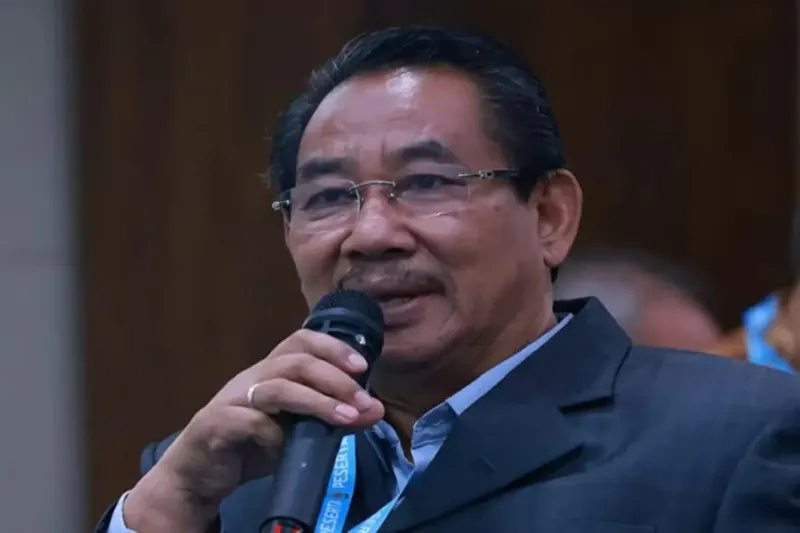
Muhammad Fikri Thobari, former regent of Rejang Lebong in Bengkulu Province, was sentenced to five years in prison and had his political rights revoked in a bribery and gratification case over regional project arrangements.
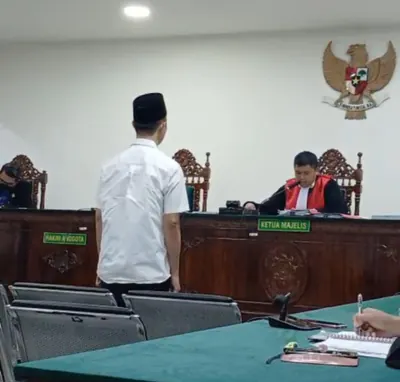
Former Rejang Lebong Regent Muhammad Fikri Thobari was sentenced to five years in prison in a bribery and gratification case involving project arrangements, or fee ijon, inside the Rejang Lebong Regency Government, according to TVRI News.
The hearing at the corruption court at the Bengkulu District Court was held on Tuesday and led by presiding judge Fajar Pramono. The panel found Fikri guilty of the corruption charges. He was also fined 200 million rupiah, with 80 days of detention if the fine is not paid, and banned from exercising political rights for five years after completing his prison sentence.
In the same case, former head of the Rejang Lebong Public Works, Spatial Planning, Housing and Settlement Areas Agency (PUPRPKP), Harry Eko Purnomo, was sentenced to four years in prison and fined 200 million rupiah, with 80 days of detention if the fine is not paid. Fikri's sentence matched the demand by prosecutors from the Corruption Eradication Commission (KPK). His lawyer, Dian Ozhari, said the panel had not considered the defence arguments and Fikri's cooperative attitude. Prosecutors and lawyers for both defendants said they would take time to consider whether to appeal.
How fee ijon works in regional projects
In regional project cases, fee ijon is generally understood as compensation discussed or given in advance to an official with authority over a work package. It is distinct from official spending recorded in the budget. In procurement, such a practice can change who carries out a project, the value of the contract and when work begins. Cases involving project arrangements therefore often touch the core authority of a regional head and a technical agency head. Outside legal terminology, the practice can push contractors who do not pay such compensation out of competition.
Rejang Lebong is a regency in Bengkulu Province whose infrastructure development depends on technical agencies such as public works, spatial planning, housing and settlement areas. The head of that agency occupies a vulnerable position in project cases because the role covers planning, implementation and supervision of works. When an investigation involves bribery and gratification, the roles of the regional head and the agency head become important in assessing whether decisions were made properly or in exchange for payment. Witness testimony from project implementers and procurement officials is often central to proving such cases.
The corruption court at the Bengkulu District Court heard this case. Cases handled by the KPK usually involve suspected abuse of authority, receipt of gifts or gratification linked to a public office. At trial, judges assess evidence, witness testimony and the defendants' defence before imposing principal and additional penalties. Prosecutors may also present transfer records, project documents or receipts connected to the officials' positions.
Revocation of political rights is an additional penalty that takes effect after the main sentence is completed. If a ruling becomes final, it can bar a person from being elected or holding public office for a specified period. However, while prosecutors and lawyers have said they are considering their options, the ruling is not yet final, so an appeal or acceptance of the verdict remains possible and could affect the officials' political careers. A political rights ban can also shape local political plans, including the possibility of running in future regional head elections.
What the ruling means for public services in Rejang Lebong
For residents, a case like this is not only about the officials sitting in the defendant's chair. A court ruling can affect public trust in procurement, especially when road, irrigation, housing and public facility projects are funded by the regional budget. If project arrangements are carried out through advance compensation, the public may end up with work whose quality, price or timing does not match local needs. Poor quality can lead to repeated repairs, wasted budget and reduced access to basic facilities.
Another impact concerns the continuity of public office. If the ruling becomes final, the revocation of political rights can close the path for a person to be elected or hold public office for the period set by the court. For the regional government, the case is also a reminder that the authority of technical agency heads must be accompanied by supervision, documentation and clear reporting mechanisms. Readers can follow whether prosecutors or defendants appeal, because that step will determine whether the five-year and four-year sentences become final. The positions of the regional head and agency head as defendants can also affect the bureaucracy's focus while the legal process continues.
For residents, the most practical step is to make sure project information is available, complaint channels are accessible and work results can be inspected before full payment is made. That way, public oversight does not stop at news reporting but enters concrete mechanisms.