East Java Strengthens Japan Partnership for Skilled Worker Placements
The East Java provincial government is deepening cooperation with the Indonesia-Japan Business Network and Japanese partners to expand placements for skilled workers, including vocational high school graduates.
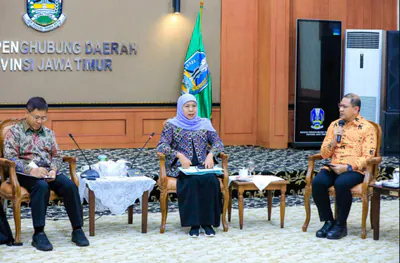
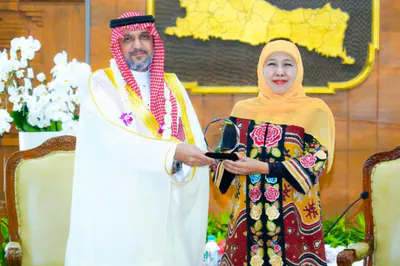
East Java Governor Khofifah Indar Parawansa said the province would strengthen its partnership with the Indonesia-Japan Business Network (IJBNet) and Japanese partners to expand placements for skilled workers, according to TVRI News reporting from Surabaya on Saturday, 21 November 2026.
The move uses the SMK Go Global programme, initiated by the Ministry of Protection of Indonesian Migrant Workers (KP2MI) and the Indonesian Migrant Workers Protection Agency (BP2MI). The provincial government wants preparation of graduates from vocational high schools (SMK) to be more targeted, so Japan's labour needs are met and East Java's workforce is absorbed more effectively.
Khofifah made the commitment during a meeting with an IJBNet team and Japanese partners at the East Java provincial government liaison office in Jakarta. She said an interview-before-training scheme could provide certainty of employment, because participants who pass selection could be prepared directly through job training centres (Balai Latihan Kerja) or training units run by local governments.
Financing support is also being prepared. The East Java provincial government said cooperation with Bank Jatim, the regional bank, offers a 3 percent interest rate and a financing ceiling of up to 50 percent, while some schemes carry no cost because employers in Japan cover participants' needs.
Head of the East Java Education Office Aries Agung Paewai said the province's vocational facilities were ready, including 2,163 public and private SMK schools that have been mapped by areas of expertise. According to TVRI News, he said East Java's vocational education ecosystem was a key asset for meeting Japanese industry needs.
East Java's vocational ecosystem and Japan's labour market
Japan has long been one of the main destinations for Indonesian migrant workers because of demand in elderly care, manufacturing, construction, agriculture and hospitality. That demand is linked to Japan's growing elderly population and shrinking workforce. For prospective workers, these sectors require technical skills, discipline and basic to intermediate Japanese language ability. Some positions also require recognised skills certificates.
In that context, vocational education is an important route because SMK graduates are generally prepared for work with more measurable competencies than graduates of general education. In East Java, the network of SMK schools, job training centres and local training units can serve as the upstream pipeline for workforce preparation. Competency certificates, training records and employment letters are among the documents often requested. However, school readiness alone is not enough; prospective workers still must go through selection, language training, work-culture orientation and protection procedures before departure.
Cooperation with Japanese business networks is also relevant because labour placement is not only about sending people, but also about ensuring the qualifications required by employers are met. In Japan, some work schemes for foreign workers require suitable training or work experience, including competency and language tests. Early interviews can therefore reduce the risk that prospective workers undergo long training without certainty of employment.
East Java's position also needs to be read within the national labour ecosystem. The province has an industrial base, vocational education and a strong tradition of sending migrant workers. When local governments, the ministry responsible for migrant worker protection, regional banks and Japanese private partners are connected, job placements can be better organised. The challenge is to ensure every scheme complies with protection rules, rather than simply chasing the number of departures.
What it means for job seekers and families
For readers in Indonesia, especially young job seekers, the cooperation offers a clearer route to work abroad. If the interview-before-training scheme is implemented, prospective workers can save time and money because they do not have to undergo lengthy training without certainty. For families, orderly placement also means more stable income and lower fraud risk, provided the process is carried out through official institutions.
The impact does not stop at the individual. Returning workers usually bring language skills, industrial discipline and work experience that can be used in local sectors. Local governments need to monitor that financing, training and employment contracts are genuinely protected. Going forward, attention should focus on matching skills, the quality of training institutions and complaint channels for migrant workers, so economic cooperation does not come at the expense of participants' safety.
For the general public, this information is important before choosing a route to work in Japan. Prospective workers should compare training costs, contract certainty and the legality of employers. That way, overseas job opportunities can become a realistic option rather than merely a promise of high income.
Related news
- Khofifah installs six East Java provincial Echelon II officials
- East Java police chief visits SMAN 1 Sumberrejo to motivate students
- East Java-West Java trade mission in Bandung records Rp8.6 trillion in transactions