Bawaslu Urges Its Social Media to Listen to Public in Papua
Bawaslu member Lolly Suhenty says the election watchdog's social media should listen to public criticism, not just announce information.
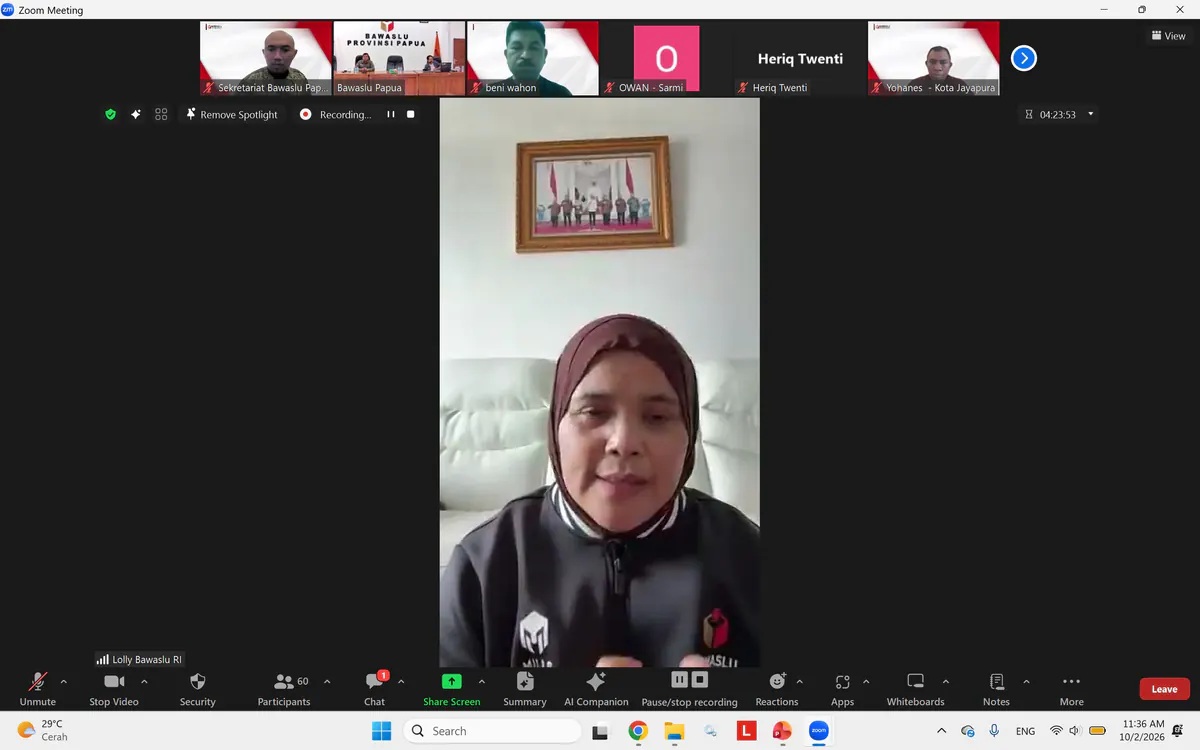
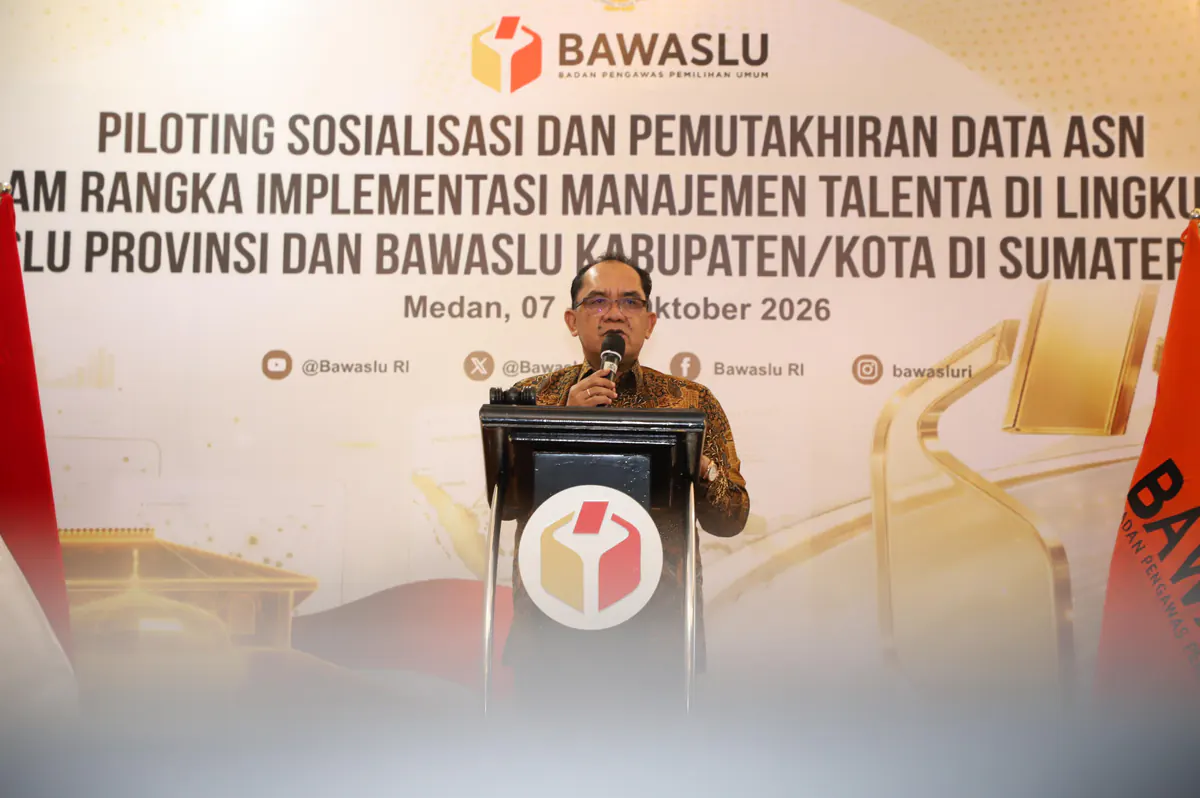
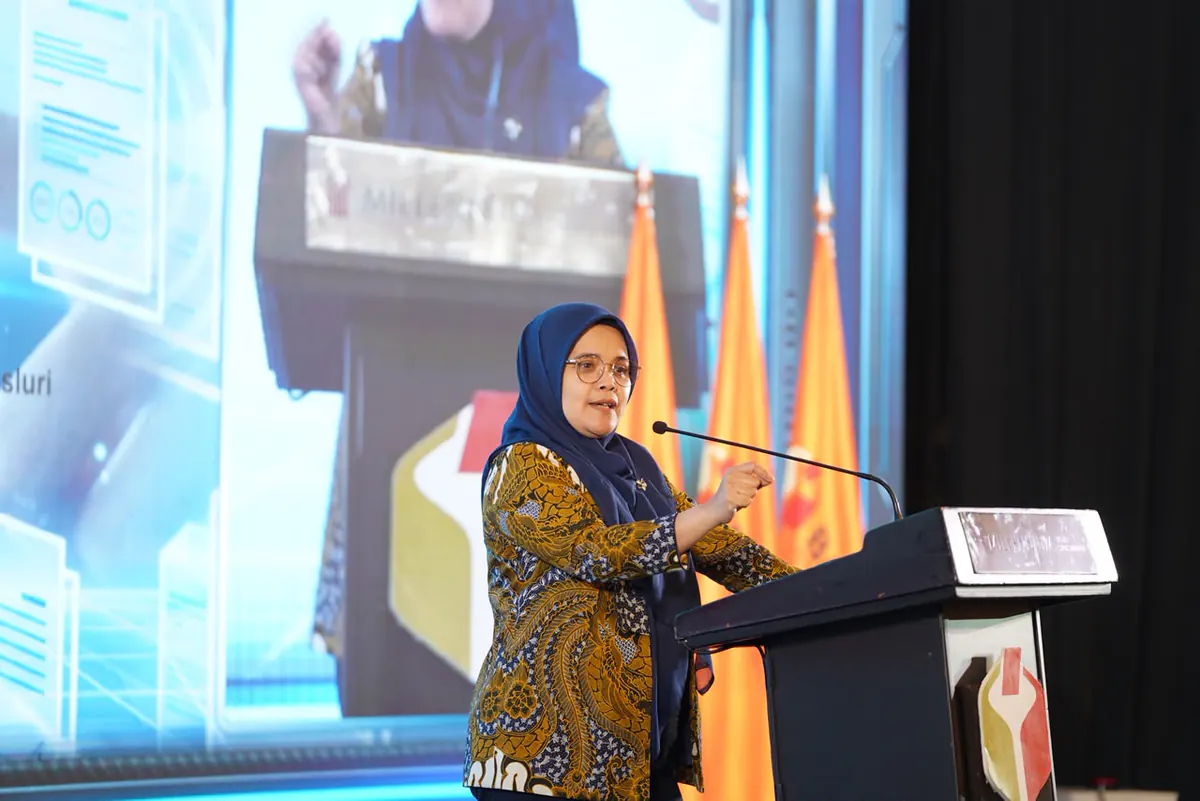
Lolly Suhenty, a member of the Election Supervisory Agency (Bawaslu), asked that Bawaslu's social media not stop being an announcement channel but become a space to hear public questions, suggestions and criticism.
She made the remarks during an online meeting of Bawaslu Papua, the agency's Papua office, to evaluate publication policy and public relations strategy during the non-election period on Friday, 2 October 2026, according to a report by Bawaslu RI, the national election watchdog.
Lolly, coordinator of Bawaslu's Division for Prevention, Public Participation and Public Relations, said public conversations about the election supervisory agency and democracy should be used as a basis for evaluation. She said public relations work was not enough if it produced large amounts of content without reading the public's response. “Today, social media must become a space for listening, not merely a space for speaking,” Lolly said.
In the Papua context, she highlighted limited connectivity. According to Bawaslu RI, about 2,000 kampung (villages) in Indonesia still lack good internet access, most of them in Papua. Digital channels alone are therefore not enough to reach voters and residents in remote areas.
Non-election period does not mean quiet communication
The non-election period is when the stages of a general election (pemilu) or regional head election (pilkada) are not running. The term matters because the election watchdog's work does not stop on voting day. The agency still needs to maintain public trust, prepare resources, monitor potential violations and nurture citizens' political literacy.
In that context, social media becomes one of the main doors for the state to communicate with voters. Official channels of the supervisory agency are usually used to announce schedules, remind the public of campaign rules, explain oversight mechanisms and show the results of handling reports. But if communication is only one-way, the public may easily feel that the agency is distant, appears only during disputes or speaks only when there are problems.
Lolly's remarks mark a shift in how public agencies communicate: from spreading information to listening to conversations. Questions in comment sections, criticism of performance, or confusion about rules can serve as a map of information needs. From that map, the agency can decide which education to deepen, which messages need correcting, and which channels are most appropriate for particular voter groups. Two-way communication can also reduce misunderstandings about the watchdog's role. For example, the public may assume the agency only handles disputes over election results, while its role also includes prevention and participatory oversight. A more complete understanding can make residents less hesitant to report problems to the nearest supervisory body.
Papua's challenges show that communication strategies cannot be uniform across all regions. In cities with stable internet networks, social media can move quickly and cheaply. In kampung with limited signal, official messages may fail to arrive if they are only posted online. Community radio, resident meetings, local media and grassroots supervisory networks can bridge the gap so information is not concentrated only in the provincial capital. A mixed approach is also relevant for young voters, first-time voters and residents who are more likely to discuss local issues than technical election or oversight terms on social media.
What regional public should pay attention to
For voters, this change in communication can have practical effects: election rules become easier to understand, residents know how to file reports, and they know where to ask questions when they encounter incorrect information. If official channels actively read comments and questions, the public may feel it is not merely the target of outreach but part of participatory oversight. In regions, residents can also use official complaint channels so that questions do not stop at social media. In this way, online communication can continue into concrete, documented and useful action for oversight.
The impact is most felt in areas with limited internet. Residents in kampung with weak signals need information routes close to them, such as community radio or meetings with local supervisors. Without those routes, the risk of disinformation rises because official information does not reach people while messages from chat groups or unclear sources continue to circulate.
Going forward, the success of the watchdog's public relations work should not be measured only by the number of posts. It should also be measured by whether the public can explain their voting rights, recognise violations and report problems in the right way. Social media that listens can help close the distance between agency policy and voters' needs. It can also help preserve the legitimacy of election results that are more trusted by the public.
Related news
Hanura strengthens structure down to villages in Papua ahead of the 2029 general election