Bawaslu Warns of Risks in Continuous Voter Data for 2029 Election
The General Election Supervisory Agency (Bawaslu) has asked regional election supervisors to prepare documentation of Continuous Voter Data Updating (PDPB) oversight results because the status of voter data for 2029 remains unclear.
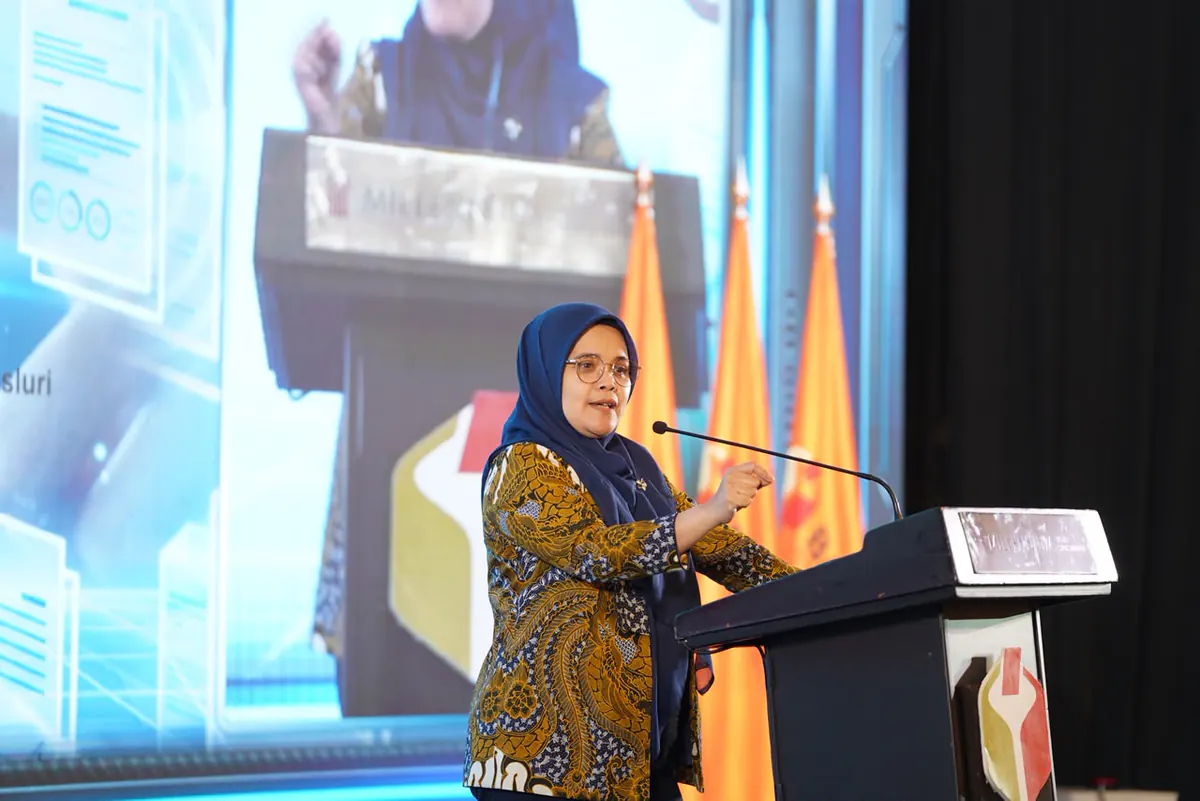
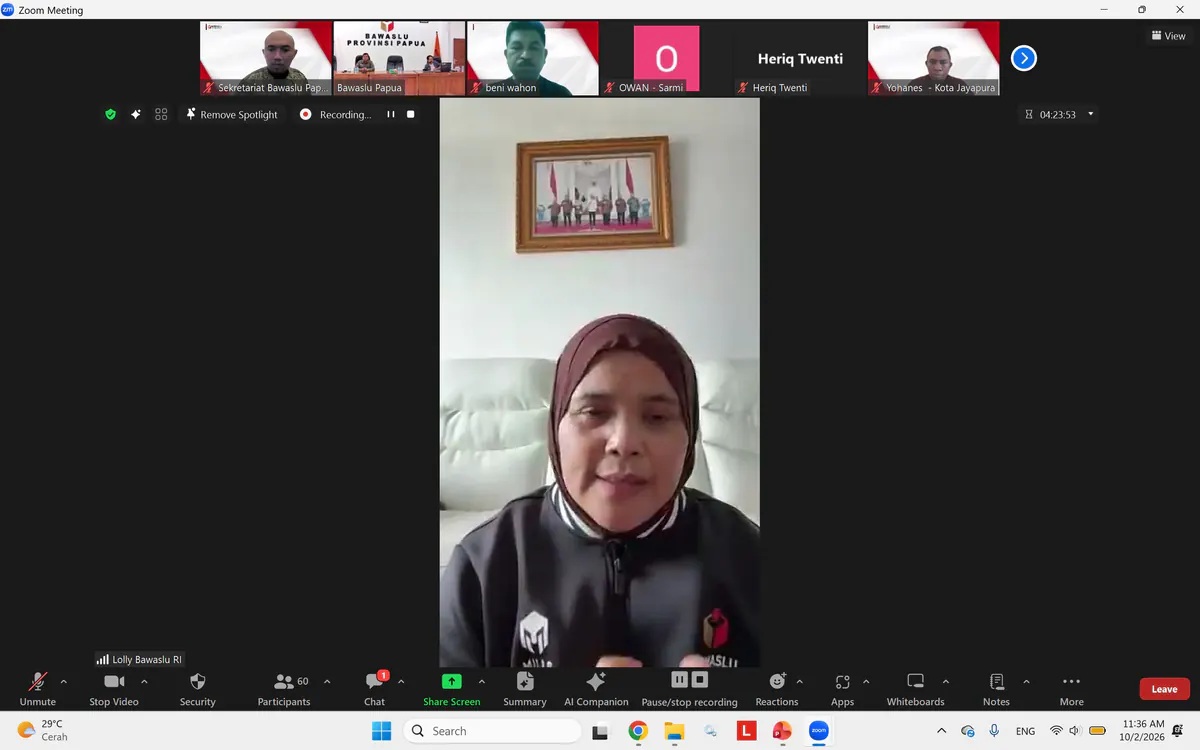
A member of the General Election Supervisory Agency (Bawaslu), Lolly Suhenty, asked all regional election supervisors to be alert to the risk that the function of data from Continuous Voter Data Updating (PDPB) could shift ahead of the next election cycle. She made the request during the drafting of a vulnerability mapping of strategic PDPB issues in Jakarta on Tuesday, 13 October 2026.
According to a Bawaslu report, Lolly warned that the main vulnerability lay not only in the updating process, but also in the certainty of the data's status after updating was complete. She questioned whether PDPB data would become the main source for the 2029 voter list or merely supporting data.
To anticipate a regulatory vacuum, Lolly instructed that documentation of PDPB oversight results be prepared neatly and accurately. “Make sure our PDPB oversight results are well documented,” she said.
Bawaslu said the technical guidelines for cooperation with the Directorate General of Population and Civil Registration under the Ministry of Home Affairs (Ditjen Dukcapil Kemendagri) would be completed within two weeks, allowing supervisors to access a web portal for data checks based on the National Identity Number (NIK).
Safeguarding voter data accuracy well in advance
Continuous Voter Data Updating, or PDPB, is the process of updating information on people eligible to vote outside the election stages currently underway. In Indonesian electoral practice, voter data cannot be considered complete simply because one election has been held. Residents who are 17 years old, newly married citizens, people who have moved domicile, those who have died, or those who have changed from members of the Indonesian National Armed Forces (TNI) or national police (Polri) to civilian status need to be recorded up to date. Therefore, continuous updating serves as a bridge between population data and the voter list to be used in the next election.
The problem is that data produced by PDPB can have different standing depending on regulations and decisions by election organizers in an election year. It may become the main source for compiling the voter list, but it may also serve only as comparison or supporting material. This difference in status matters because it determines how much influence oversight findings can have on data corrections. If PDPB data is only a supporting source, supervisors must have additional evidence so that recommendations for improvement do not stop at administrative notes.
On the other hand, voter data oversight depends heavily on interoperability with population data. The NIK is key to ensuring that one person is recorded once, is not duplicated and is not fictitious. However, access to population data must not be equated with opening all personal information. Election supervisors need valid, measured and accountable verification, especially when they must distinguish valid data, data needing rechecking, and data that do not meet requirements.
Documentation of oversight therefore becomes part of accountability. Field notes, official minutes, clarification results and correspondence with election organizers can serve as evidence that Bawaslu is carrying out a preventive function. Neat documentation also facilitates evaluation when there are discrepancies in voter numbers, administrative disputes or public questions about the validity of voter lists. Without well-ordered archives, even good oversight is difficult to prove later. Complete archives also become a reference when the public, political parties or monitoring organizations question voter lists. Without that, public trust in the results of data updating can be eroded.
Why citizens should care about voter data
For voters, inaccurate data can lead to troublesome administrative experiences: not being registered, being registered far away, or being recorded with the wrong status. On polling day, such problems can force citizens to seek a voting transfer document, wait for clarification, or even lose the chance to exercise their voting right. Therefore, PDPB oversight is not only the concern of election organizers but also the interest of citizens who want their constitutional rights protected.
From a policy perspective, clarity on the status of PDPB data determines the direction of budgets, priorities for improvement and the design of future election oversight. If the results of continuous updating are recognized as the main source, supervisors' findings can directly influence the compilation of the voter list. Conversely, if their standing is only supporting, Bawaslu needs to work harder to prepare comparison data and field evidence. This situation makes risk mitigation and documentation tools for keeping the electoral process transparent and auditable.
For general readers, developments in technical cooperation with Ditjen Dukcapil signal that voter data oversight increasingly requires a verification-based approach rather than mere claims. Going forward, the public needs to watch whether such access is used in a limited, secure manner and in accordance with personal data protection regulations.