Police secure suspected attacker in assault on worshippers at mosque in Jakarta Timur
Police secured a suspected attacker in a bladed-weapon assault at Darul Ma’arif Mosque in Jakarta Timur that injured three people, while the motive is still being investigated.
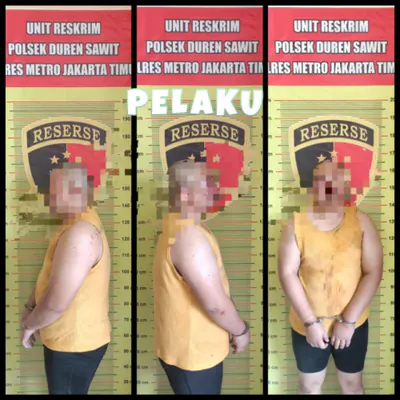
Police secured a suspected attacker who used a bladed weapon against worshippers at Darul Ma’arif Mosque in Pondok Kelapa, Duren Sawit, Jakarta Timur (East Jakarta), on Sunday, 8 November 2026, injuring three people.
According to a TVRI News report, Senior Police Commissioner Budi Hermanto, head of public relations of the Metro Jaya Regional Police (Polda Metro Jaya), said the suspected perpetrator had been secured and the case was being handled by Polres Metro Jakarta Timur, the East Jakarta police resort. He said witnesses saw fire near the mosque door during the Subuh dawn prayer, after which the attack took place. Three victims were taken to hospital. Police seized an axe, a dagger, two 3-kilogram liquefied petroleum gas (LPG) cylinders, and gasoline.
Legal process after attack leaves injuries
Under Indonesian criminal law, an incident like this is usually read as a series of suspected offenses rather than a single label. An attack with a bladed weapon may touch provisions on assault, attempted killing, violence causing injury, or the possession and use of dangerous implements. In a place of worship, the timing and the presence of a crowd can increase the number of injuries even when the initial intent is not always to kill. Investigators do not stop at the victims’ injuries; they also link the implements, the time, the place, witness statements and any possible planning.
The status of a person mentioned in the report also has a clear limit. A suspected perpetrator is someone suspected of involvement based on initial findings; he is not automatically a formal suspect, let alone a defendant. A suspect appears after investigators find at least two pieces of evidence under criminal procedure law. A defendant is someone charged and tried in court, while a convicted person is someone sentenced by a final and binding ruling. Therefore, the word ‘suspected’ is not a linguistic decoration but a safeguard for the presumption of innocence.
The items cited by police, such as the axe, dagger, gas cylinders and fuel, matter because they can serve as evidence or clues. The gas cylinders and gasoline raise questions about possible arson or a threat of explosion, so investigators need to examine whether they were prepared to carry out an attack, to create chaos, or to relate to other events. In a case that occurs in a place of worship, the context of the location is also considered because it can affect the assessment of motive, social impact and witness protection.
The handling at the police resort level indicates that the case is in the preliminary inquiry or early investigation stage. At this stage, police gather statements, medical examination reports, camera footage, forensic laboratory results and other clues. Investigators may also check whether the person had previously made threats, had a history of violence, or needed assessment by a psychiatric expert, where those findings are relevant. The public usually does not receive the full file, because information released too early can disrupt the investigation and create room for prejudice.
Impact on worshippers’ sense of safety and city residents
An incident at a mosque during the Subuh dawn prayer touches a habit of many Indonesians: a place of worship is not only a site for prayer, but also a relatively open meeting point for residents. When violence appears there, the victims are not only the three people injured, but also the sense of safety of other worshippers, their families and the surrounding environment. For readers in Jakarta, the practical question is how to keep places of worship safe without turning them into places of suspicion.
For residents, the most useful step is to refrain from spreading videos, photos of victims or unverified accusations. Incorrect information can hurt victims, corner a particular group and disrupt the investigation. If people see a similar incident, they should contact police immediately, keep a safe distance, protect themselves, and note the time, the perpetrator’s characteristics and the tools used without trying to become a street judge. Mosque congregations can also review door layouts, lighting, voluntary supervision and evacuation routes, because small details like these often determine safety in an emergency.
For a pluralistic society, appeals not to link the case with ethnicity, religion, race and inter-group issues, known in Indonesia as SARA, are important because they remind readers that the motive may be personal, psychological or ordinary criminal conduct. Until investigators conclude the background, the public needs to distinguish a suspected criminal act from an accusation against a group. The media and public figures also have a role: to set an example by waiting for official information, not guessing at victims’ identities, and directing residents toward legal channels. In that way, victims receive attention, the legal process proceeds cleanly, and community harmony is not damaged by prejudice.